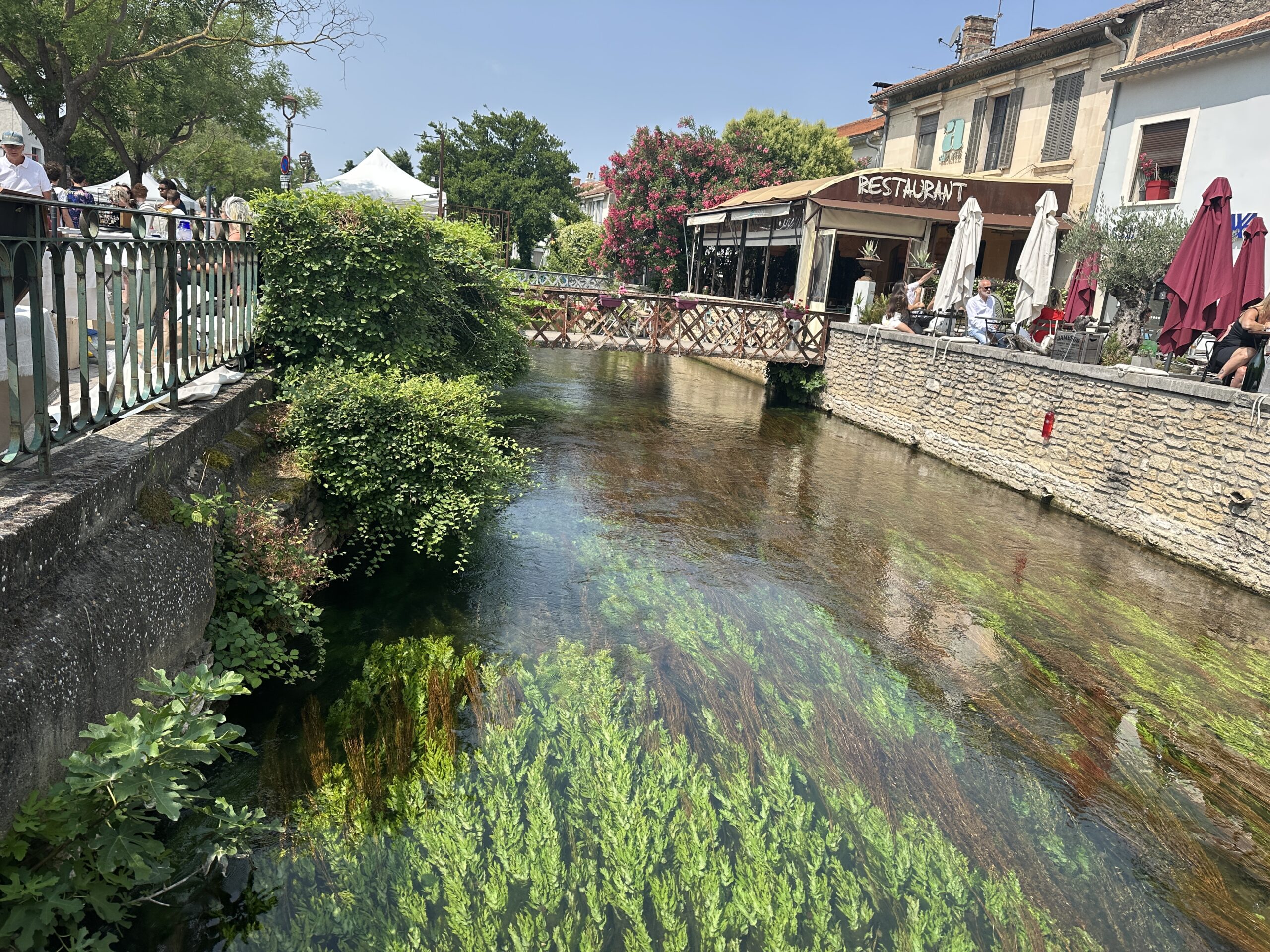
Based in L’Isle-sur-la-Sorgue, our first stop was Saint-Remy. After crêpes for lunch we saw a museum show about David Bowie that featured his every possible connection with French celebrities. It was quaint but nostalgic for me anyway.
Out of professional curiosity, we looked in on the asylum where Van Gogh was a patient for a year in 1889, with their quaint instruments and antique drugs on display. Nice leather doctor bags. Part monastery and part loony bin, the impression one gets is of a bucolic retreat, except for the isolation cell with the straitjacket. One imagines Vincent got good care, sunshine, and honest provincial cuisine. Vincent’s room was utterly recognizable, as are the flowers in the garden. He painted his famous Irises during his stay.
Next, we visited the ancient town of Glanum, only a few klicks down the road.
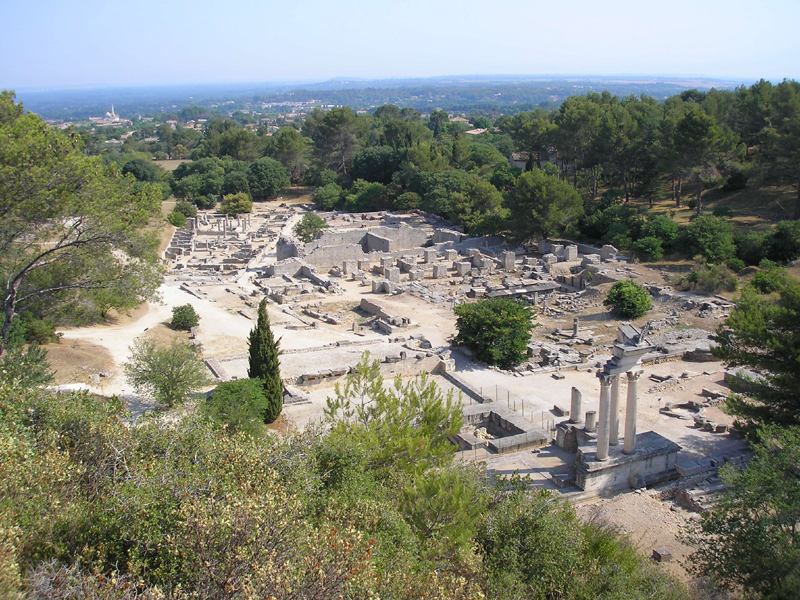
Only 1/10 of the original town has been revealed, with elaborate plumbing and infrastructure as well as sculptures and artistic remains from 4th c BCE by, in turns, the Celts/Gauls, the Greeks, and the Romans from 49 BCE until it was destroyed by ancestors of Attilla in 260 CE, and abandoned. Evidently the site’s renowned healing spring failed to make much of a defense against the deplorable hordes, and all this only made us worry about the Marines in L.A.
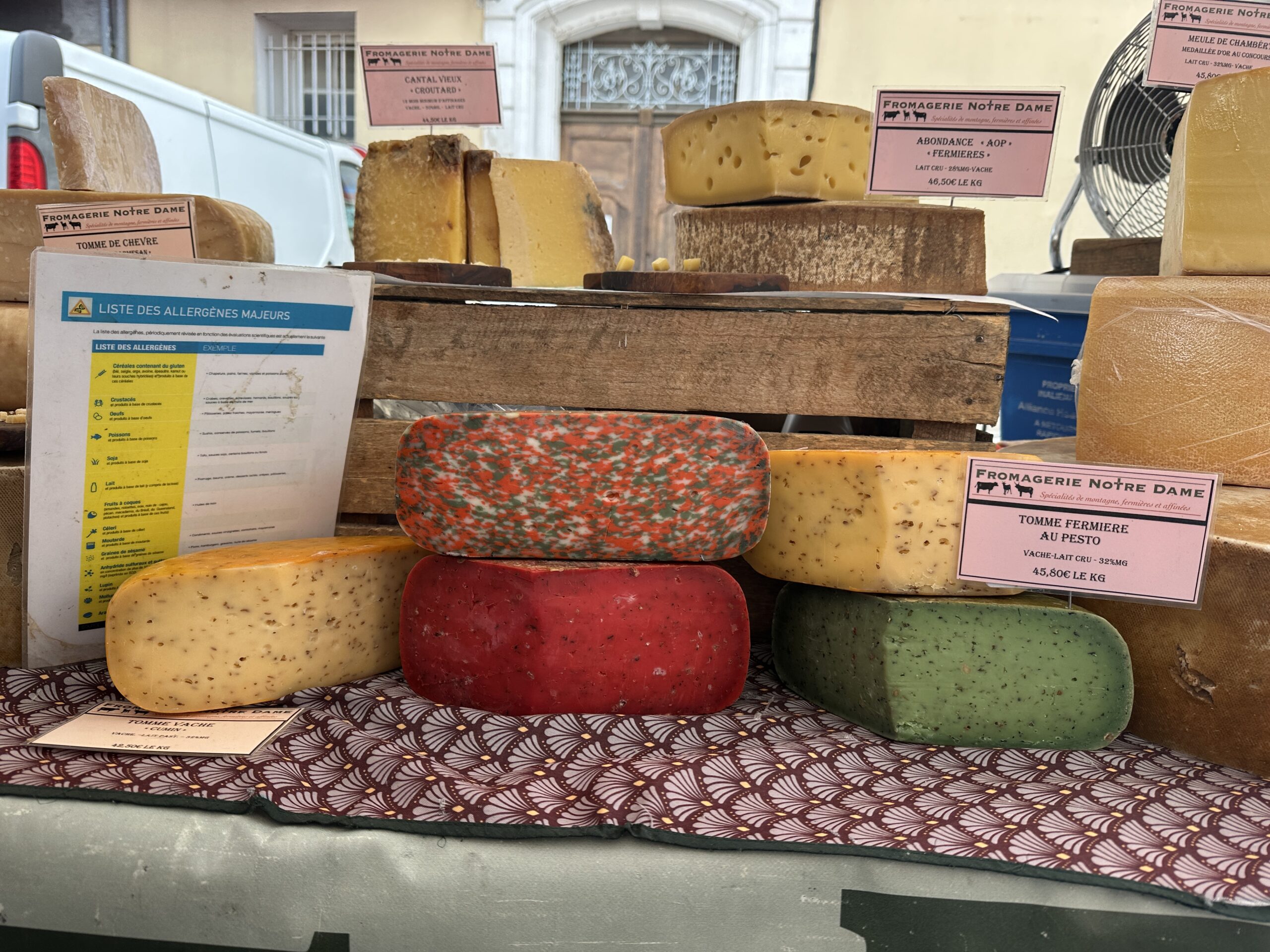
The next day in L’Isle-sur-la-Sorgue was market day, a ton of windy fun. Merch included edibles, wearables, and dining gear, all with a beautiful French twist. It was a very pretty day, but rather than further exhaust ourselves visiting civilizations eradicated by deplorables, we opted to have a quiet time by the hotel pool and then disassemble our edible panoply. We had a fabulous pistachio pate-en-croute from a prize-winning traiteur, cheeses evidently made in flights of fantasy from local institutions, and some palatable Languedoc wine.

We happened to go to Uzès on Whit Monday, whatever that is, but some shops were open, and our new obsession with Aperol Spritz and Pastis was in full swing. Uzès is a little jewel of a town, not too touristy, with 9,000 inhabitants. We went to a medieval garden and towers, which were used as a prison at one point, with graffiti scraped into the wall by 3 prisoners decrying their innocence. It seems their only crime was being poor, in any case.
We have been spoiled thus far, wandering around charming provincial towns of Orange, Avignon, Cassis, Uzès, and the big cities of Marseille and Lyon without feeling like we were really at Epcot. Not so with Arles. Gaggles of 30 visitors wearing headphones connected to their guides’ transmitters clog every adorable pedestrian intersection. We are not judging; we too are visitors. However, we feel more inclined today to sit in a cafe than to ogle ancient ruins. Tomorrow is another day!
Carcassonne
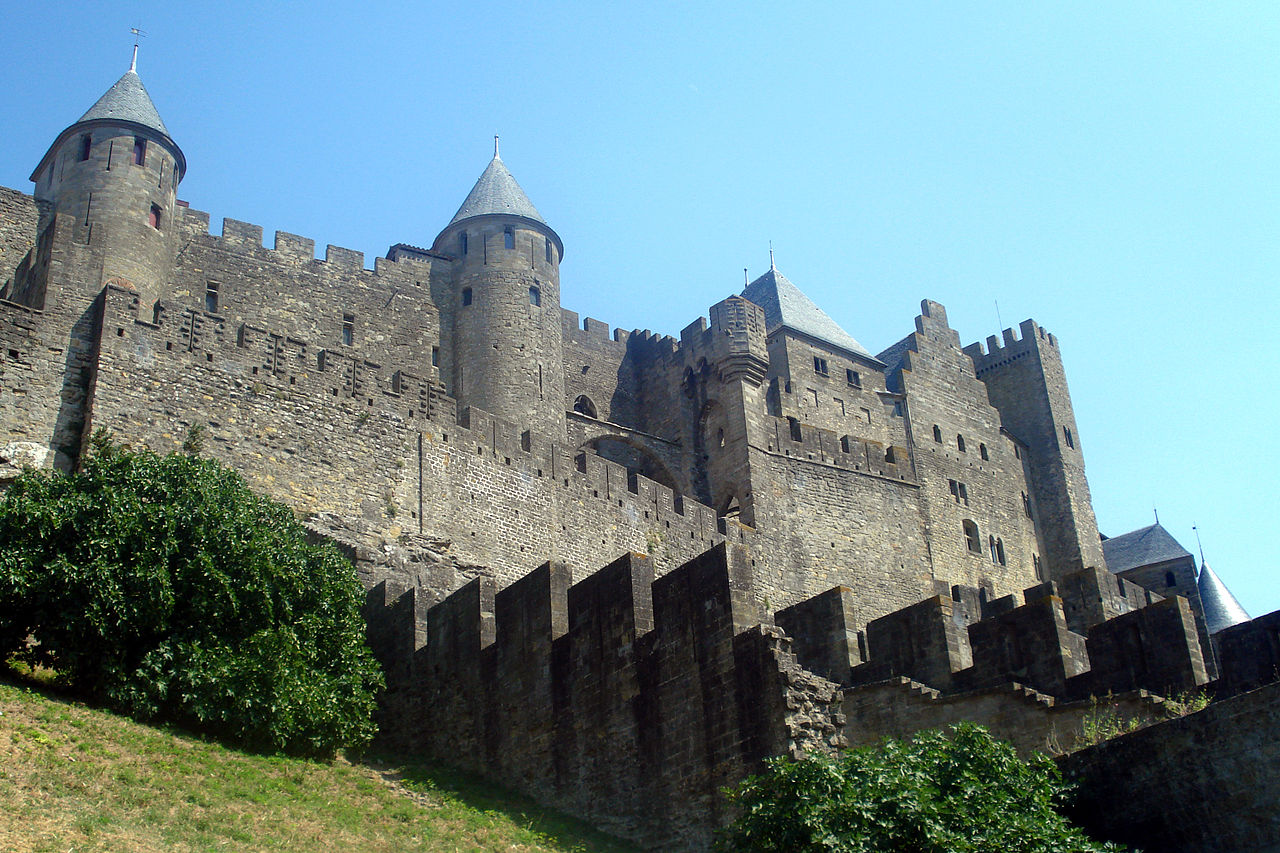
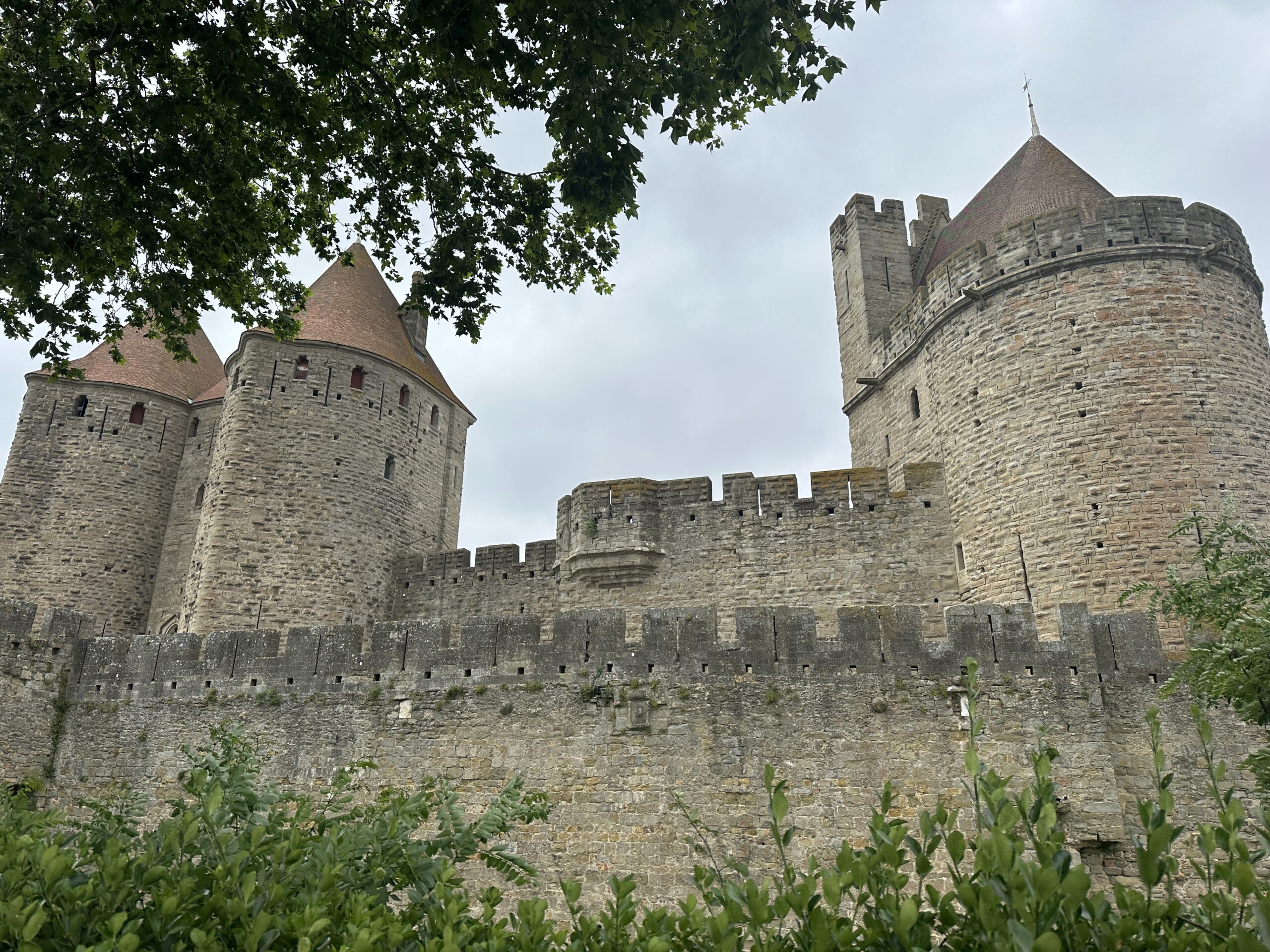
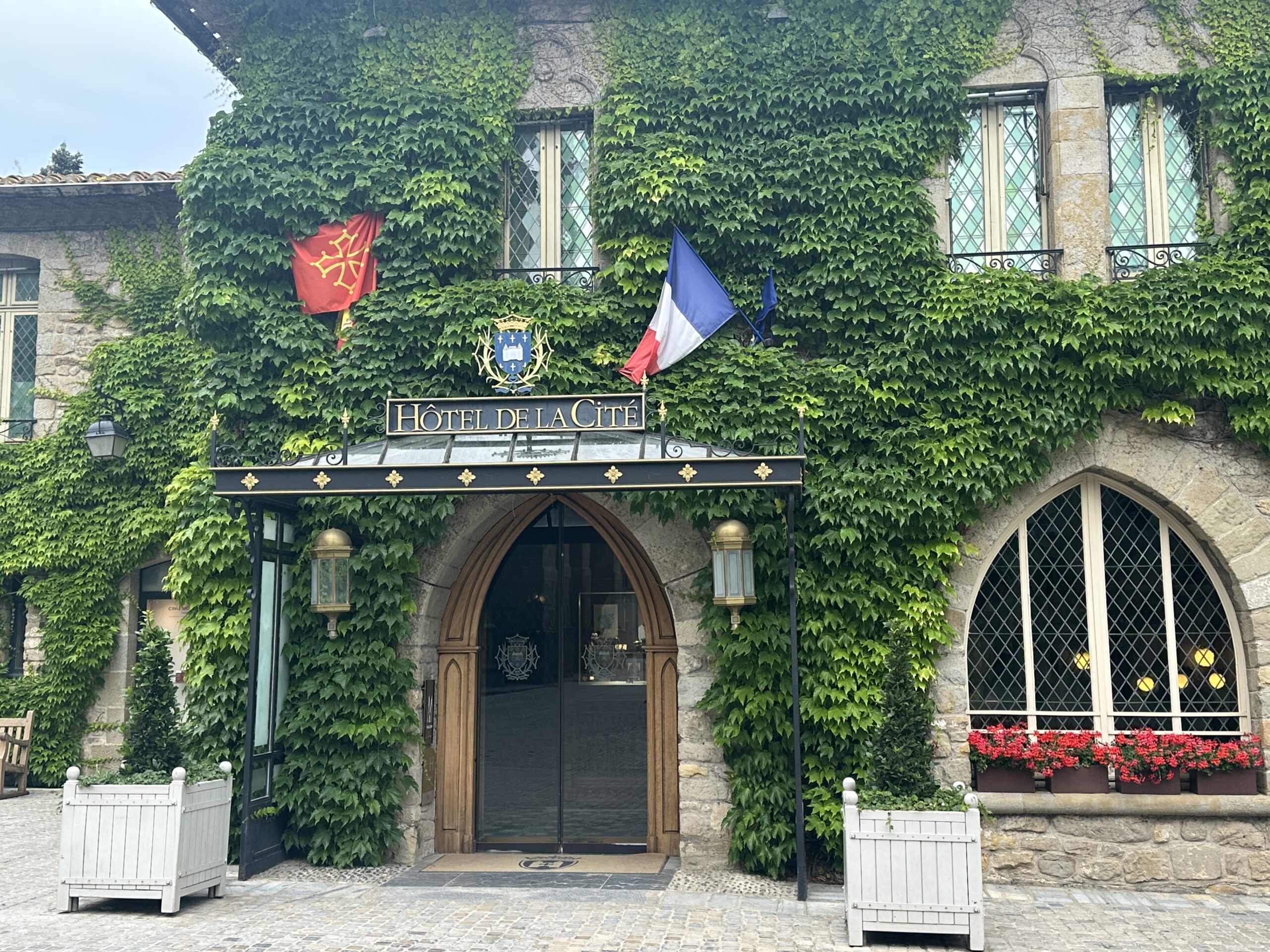
Here’s a 2000-year-old fortress town that was occupied in turn by Romans, Visigoths, Saracens, Crusaders, and tourists. In the 1800s, the architect who restored Notre-Dame in Paris was given the job of restoring the city, and the result is impressive. From our hotel garden, we look across the restaurant at the inner castle in the distance. We are living in the historic site!
We spent a day walking the ramparts, being invited to imagine an enemy attack. Carcassonne is a wonder of medieval military science. Every nook and cranny is designed to foil a siege, which was the main way war was waged prior to 1350, when the cannon was invented. Slits in the wall are angled in such a way that an arrow could be shot without the shooter being exposed. Entrances to the fortress city are crooked so battering rams can’t get up any momentum. Platforms overhead allow soldiers to drop stones on attackers’ heads (although not boiling oil, as that was too expensive). Wall surfaces are curved, so it takes more force to knock them down. It’s amazing how much thought went into how best to kill the other guy.
The city got its name in the 700s when Charlemagne was conducting a siege of the fortress. The inhabitants were dying from starvation, but Madame Carcas had the inspired idea of force-feeding a pig with grain and then throwing it over the wall– splat! Charlemagne concluded that his siege was not working if the denizens of soon-to-be-named Carcassonne had enough food to waste a pig thusly. So he packed up and went away. Now that is clever!
Experts differ on the veracity of that account, but sadly, there is another story from 600 years later that is more likely true. The lord of Carcassonne, Viscount Trencavel, ran a lovely court where tolerance reigned. Jews and Muslims, as well as Christians, were all welcome. Pope Innocent was not too fond of this arrangement and sent a bishop to express the Pope’s displeasure. (There was also a religious sect called the Cathars who seem fairly cool and who also annoyed the Pope). When the bishop arrived decked out in jewels, he was not well received, and in fact, somebody murdered him. The Pope called for a crusade, which became oversubscribed when riches and other plunder were promised. All sorts of knights, lords, and such volunteered for the mission and literally killed every man, woman, and child here and in other places nearby. I guess we were not in the mood to steep ourselves in religion as an excuse for greed and wanton bloodshed, given the news about LA and tRump this week, but in fairness, this place deserves to be the hotbed of tourism. It is quite something!

Tomorrow we’re off to a region that invented world trade–Bordeaux. The product was claret, as the British call the wine that gave generations of them gout.